
by Charlotte Hamrick
Ronita Chattopadhyay’s micro chapbook, Preparing to be Wrecked, is one of five micro chapbooks in the collection Grieving Hope, edited by Diane Gottlieb for ELJ Editions, 2025.
The eight pieces in Ronita’s collection explore feelings of grief and confusion as a young girl at the death of a dear friend, her first loss, and how the experience might influence future losses.
I talked with Ronita about the book, her writing journey, and writing in general.

What is your earliest recollection of the desire to write?
I am not really sure about this. But I have always loved writing. At home, my parents and my brother are avid readers. We always had books. I was also fortunate to have supportive English teachers in school. So, all that helped.
Do you remember your first written memoir as a stand-alone piece? What was it about?
I began writing poetry before I wrote prose. Most of the poems emerged from personal experiences of coping with frustrations, losses and griefs of various kinds. In that sense, most of it was memoir-ish. Also, blank verse began to merge into prose poetry that was also ‘Creative Non-Fiction’. For me, the distinctions between these forms became pretty blurred pretty quickly!
I had also joined an online Memoir writing workshop (Ochre Sky) facilitated by Indian writer and film maker Natasha Badhwar. Later, I joined a writing circle which had participants from multiple such workshops. Here, Natasha was joined by another amazing facilitator Raju Tai. All of us became partners in journeys of reflective writing and sharing. The first piece of Preparing to be Wrecked, ‘Viridescent Grief’ emerged in this workshop albeit in a different form. I wrote about my relationship with water (the prompt was ‘water’) which remains coloured by the loss of a childhood friend by drowning. This piece was longer. Something made me revisit it and turn it into a compact world of 170 words. It became like a painting of a moment in time that has stayed with me, but also a painting that captures the journey with grief that is no longer a sharp pain but is softer, like a gentle presence that accompanies me.
Do you keep a journal and, if so, was it instrumental in organizing your thoughts for your collection? If not, was mining your memory the key to your collection?
I went through stages of passionate diary writing in my childhood that eventually wore off. I did do a form of journalling through morning pages introduced in the writing circle. But I have not been very consistent with that either. For the collection, I relied more on memories of feelings experienced, the kinds that define you.
I love that you chose micro memoir as your form. Is there an author that might have inspired you to write in this form or was it organic?
Actually, I have never been good at writing long pieces. While studying English literature in college, I would typically write about two pages for all questions whether those called for short answers or long! I felt that put me at a disadvantage, at least in terms of getting marks. But now I think that is not a bad skill to have. So, yes, it was organic.
Joan Didion’s book, The Year of Magical Thinking, is mentioned in your title piece. Have you read it? If so, did it influence your writing?
No. I still haven’t gotten around to reading it. It has remained on my consistently expanding TBR pile.
“What I would like to tell ten-year-old me about survival strategies” is a sweet and poignant piece. I love how it feels like it came from your heart in an illuminating moment. Tell us a bit about it – am I right?
Thank you for saying that. When I was putting together the collection, I wanted to have a couple of pieces that were explicitly about hope. And somehow, that arc with the placement of the two hopeful pieces in the end also emerged organically. Coping with the death of a childhood friend lay at the heart of the collection and I think unconsciously (or subconsciously) I returned to that period for finding hope as well. The writing flowed naturally. The adult me could identify all that was positive and hopeful in my childhood that could now be called survival strategies. What I wanted to say fitted very well within the device of writing to a younger self.
Do you have a favourite piece in your collection? If so, why is it your favorite?
That is a very difficult question. I don’t have a favourite.
Do you have a favorite place to write that’s particularly conducive to your creativity?
For the past few years, I have written mainly in my room. I make notes in notebooks or on the phone if I have an idea or get excited about a phrase when I am elsewhere or travelling. Somehow, and I am not exactly sure why, I tend to write most of my poetry with pen and paper while the prose (when I know it is clearly going to be that) is typed on my laptop.
What do you love about writing?
It is essential for me. It is one of my primary means of sense making and coping and healing. Writing has always been a way of understanding myself and our many worlds better. I also have a friend who is one of the biggest supporters of my writing. Her mother enjoyed reading and writing but somehow could never fully experience both. Household care and responsibilities always took precedence. This friend always urges me to write, to chronicle and share my experiences and perspectives. In a way, when I am writing, I am also honouring the women who could not.
What frustrates you about writing?
Like many others, I sometimes have the writer’s block. But fortunately, it does not usually last long. I have learned not to put pressure on myself, to do other things. After all, doing whatever we have to do, the daily business of living – all that is also writing or at least preparing for writing in some way! I also often find myself uncertain of meanings of basic words or how I should use them. And then I can easily get lost in Google rabbit holes or dictionaries. But then, that’s enriching too.
Significantly, I began sending out submissions for publications in my 40s and just after the peak Covid phase. By then, I had already experienced so many complex situations and difficulties in my life. It helped in looking at the writing journey with a certain perspective. The frustrations became less frustrating then!
Do your family members read your writing? What was their reaction to Preparing to be Wrecked.
I share many of my poems and other written pieces primarily with my mother. She is an enthusiastic supporter. I love that she will sometimes revert with – I didn’t really get this part but I think it is great. I am not sure if she has read Preparing to be Wrecked fully. Maybe, I should check! Others are also supportive.
Sometimes, I am also in two minds about showing my parents certain pieces, especially the ones that deal with increasing age, illnesses and mortality. For instance, the piece Preparing to be Wrecked (which also gives the collection its name) is about anticipatory grief for my father.
What is the most valuable piece of advice you’ve been given about writing, particularly about memoir?
‘One day I will find the right words, and they will be simple’ – Jack Kerouac. This has always resonated with me. It isn’t specifically about memoir writing but is more of an intrinsic approach to writing for me. Also, there is an ever-expanding galaxy of influences from poetry and prose. Mary Oliver, Eunice de Souza, Kamala Das’s poetry and autobiography, Ilse Aichingher, Italo Calvino, writer Bhisham Sahni’s moving biography of his brother actor Balraj Sahni, Amrita Pritam, Ismat Chughtai, Sujatha Gidla… and so many more. There is always something to learn from how others approach and convey their motivations and experiences. And I have also been impressed by you Charlotte and Kim, Janet and Kristina from Grieving Hope.
What is next for you?
I recently wrote a poem that ended with the phrase ‘conspiracy for hope’ and I am kind of stuck on that. I want to explore hope, more so in these increasingly hopeless times. I am not sure what shape this will take, but I want to spend some time with it. I also wrote my first short story and would like to get more experience in that domain. And I want to keep reading particularly from our very rich and varied Indian literature.
Read more of Charlotte’s work here at Reckon.

Ronita Chattopadhyay (she/her) is an Indian poet and writer. Her micro chapbook Preparing to be Wrecked has been published as part of an anthology (Grieving Hope) by Emerge Literary Journal. Her work (poetry and prose) has appeared in various literary magazines including The Hooghly Review, Akéwì Magazine, Porch Lit Magazine, RIC Journal, Dreich, FemAsia and Atrium and anthologies by Querencia Press (Winter Anthology 2024) , Sídhe Press (To Light The Trails – Poems By Women In A Violent World), Rough Diamond Poetry (The Body Anthology) and Bare Bones (My India, My Gods). She loves mountains, books and tea.
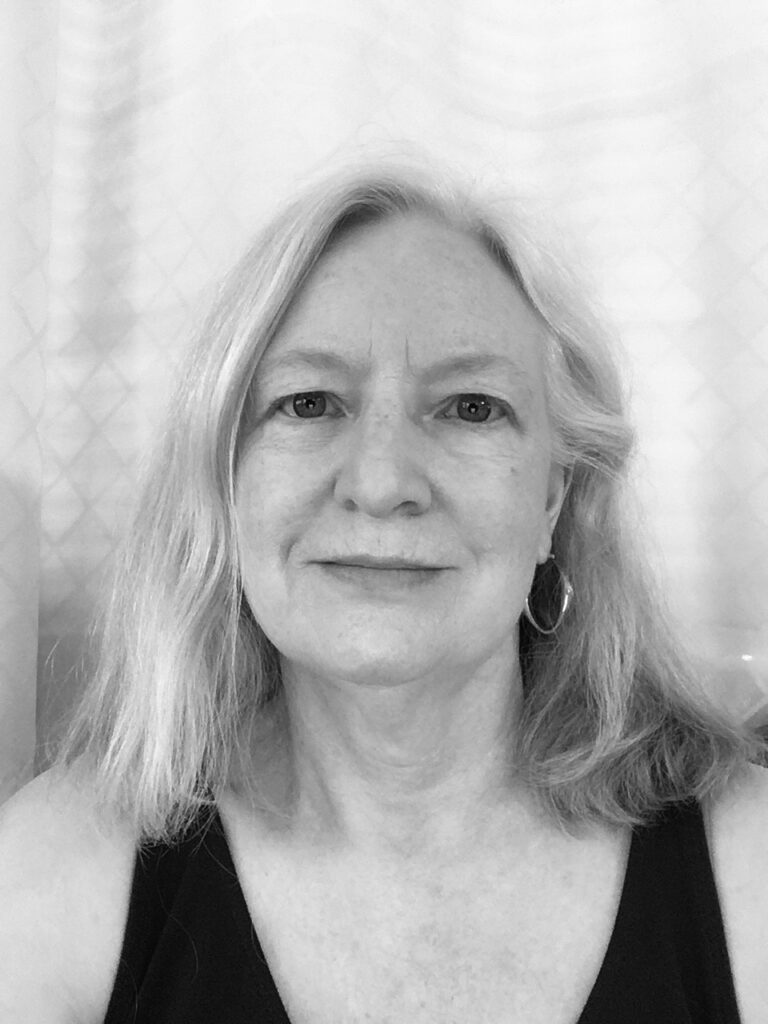
Charlotte Hamrick’s creative writing and photography has been published in a number of literary journals and anthologies including Still: The Journal, The Citron Review, Atticus Review, Reckon Review, Trampset, and New World Writing, among many others. Her fiction was selected for the Best Small Fictions 2022 and 2023 anthologies and she’s had several literary nominations including the Pushcart Prize, Best of the Net, Best Small Fictions, and Best Microfiction. She was formerly Creative Nonfiction Editor for The Citron Review and Barren Magazine. She also writes intermittently on her Substack, The Hidden Hour. She lives in New Orleans with her husband and a menagerie of rescued pets where she sometimes does things other than read and write.
One response to “THE NITTY GRITTY INTERVIEW WITH RONITA CHATTOPADHYAY”
Wonderful thoughts and amazing interview