
Few things are as daunting as a blank page or an empty screen, the sheer weight of expectation lurking in all that white space can be crushing. It’s a heaviness that settles in your chest, threatens to cramp your fingers, daring you to prove you have the words, that you’ve still got it, whatever it even is. During times of grief, illness, burnout, or sheer loneliness—that challenge can feel like too much. I can’t count the days I’ve opened a word document, stared at the blinking cursor, and thought, I used to know how to do this. Where did that person go?
When life narrows to survival, writing a full story—or even a full page—can be unfeasible. But a sentence? A single line posted on social media or scribbled in a notebook? That, I’ve learned, is possible.
I came to Twitter for the same reason as many others: I’d created something of substance—in my case quite by accident—sold it to a publisher and now needed a place to promote it. Twitter, I was told, was excellent for this.
It wasn’t, of course. Least not for me. I wasn’t especially inclined toward or good at self-promotion and having no followers and a personality geared more toward championing the works of others while feeling tacky when pushing my own, I quickly found myself in a lovely circle of artists who were similarly turned. Together we spent a minuscule amount of time apologetically pointing out we had art to buy like a group of penguins reluctantly trying to sell each other ice, and a lot of time encouraging each other and creating good work in the most haphazard way.
People shared work publicly on Twitter with a fearlessness and vulnerability I’d never encountered. A lot of it was, of course, terrible. But some of it was great. Really great. Stunningly fucking great. Churned out on a platform that was somewhere between The School of Athens and one long dick joke, flanked on either side by opportunistic commercialism and shockingly adept journalism, sporadically highlighted by flashes of honest-to-goodness A-list celebrity.
I thought it was glorious. As a promotional tool, it utterly failed me (or more truthfully, I failed it), but as a source of inspiration and motivation, it was limitless and invaluable.
Along with a book I had no idea how to sell, I arrived on Twitter with a fresh, terrifying cancer diagnosis, and the strange dichotomy of crippling pressure to produce and drive-killing ennui that such a shadow hanging over you can produce. Twitter treated this condition in the most unexpected manner: it allowed me the anonymity to share my writing and struggles at whatever pace I was comfortable with, while providing a surprisingly robust audience that actually seemed to care what I said, that I grew not by selling myself, but by being myself. These people legitimately became my friends. It was indie. It was punk rock. Shockingly wholesome and relentlessly raw and crude, 4G fast and available any time of day or night.
So, I shared too. I started every day with just one paragraph. Not always a wonderful one. Not often a wonderful one, probably. But something.
The notebooks and word documents began to fill line-by-line. The fragments added up. Looking back, I can see a breadcrumb trail of my own persistence. Tiny entries saying: I was still around, existing, creating. I became part of a thriving literary community almost effortlessly, organically.
I created micro stories—small explosions of thought: five minutes of freewriting, a scribble about my morning commute, a blurb about something my kids said or did. Bits and shards that reminded me that writing isn’t only about big projects. Often, it’s simply the act of noticing, of being present in your own life. Twitter gave me impetus to notice, and because other people seemed to care about what I noticed, I felt relevant in a way my encroaching mortality had threatened to permanently erase.
Hard times shrink us, tell us to be quiet, to get through the day, to stop expecting more of ourselves. Putting down words—no matter how small—is a quiet act of rebellion against that voice.
Those words don’t have to be profound. Writing becomes a way to say, I see. I feel. I still have something to say. The literary equivalent of scrawling “I WAS HERE!” on a bathroom stall.
That people read my soul graffiti and found value in it never ceased to blow me away.
Some of the best things I’ve ever written were spewed onto that platform in moments I felt least like a writer. They weren’t “productive.” They weren’t “useful.” But they kept the door open, just a crack, so when life finally felt lighter, I could walk back through and piece those fragments together like patches in a quilt. Not to toot my own horn, but some of the final results were pretty not awful, and I don’t think I could have done any of it by myself.
One of the hardest parts of writing through adversity is doing it alone. For a long time Twitter filled a gap for me, a hole I didn’t realize was there. It was messy and chaotic, but it was also a gathering place where you could post, “Struggling with chapter three,” and get instant sympathy. You could celebrate a milestone—”Finished my draft!”—and strangers would cheer you on.
I didn’t realize how much I relied on it until it was gone. Losing Twitter wasn’t just losing a platform, it was losing a sense of being surrounded by others who understood.
Now we have Bluesky, Threads, Mastodon, Discord—but none of them have quite recreated that feeling of a big, ongoing discussion, or recreated that vibrant literary community. Some days, I even miss “the discourse.” The sense of spontaneity, the energetic babble of everyone making art in the same digital café, is gone.
When you’re already struggling, the silence can be deafening.
Lately, I’ve been trying to find new ways to connect. It’s harder now; you can’t just fire off a tweet and instantly be part of a conversation. I’ve joined small writing groups, subscribed to newsletters, and skulked on servers full of fellow writers, rarely saying anything at all.
None of these places feel quite right, but there’s useful things about them. A critique partner I met in a chat has become one of my closest writing friends. A newsletter I started reading during a rough patch has become a kind of weekly anchor—a reminder that there are still writers out there doing the work, still cheering each other on. Many friendships that took off on little blue bird wings still soar in entirely different skies.
These connections take more effort, but I hope they last longer. Even if they don’t, at least they aren’t facilitated by a platform that can be commandeered at any moment by anyone with enough money and enough rage to buy our thoughts and communication channels, who can weaponize our very need for connection against us. That has to be better.
Still, the lessons Twitter taught me remain, the permission to write badly, briefly, and imperfectly—counting that as enough. The certainty that people care about my words. Somewhere. If I can only find them again.
While we may never recreate the chaotic magic of early Twitter, we can still find each other, still share our fragments and cheer one another on. We can build slower, quieter communities that don’t vanish in a day.
The blank page will always feel heavy, but the smallest act—one word, one line—is a victory. Writing, even in pieces, is proof that we are still here. Finding a way to share that is more than a victory: it’s a gift.
I’ll look for you. Look for me. Let’s make something ugly and weird. Let’s create oddly shaped sandcastles in the digital sand and laugh like the tide will never come. Let’s build beautiful things knowing they will never see eternity. For me, knowing you’ll witness them is enough.
Read Barlow’s other work here at Reckon.
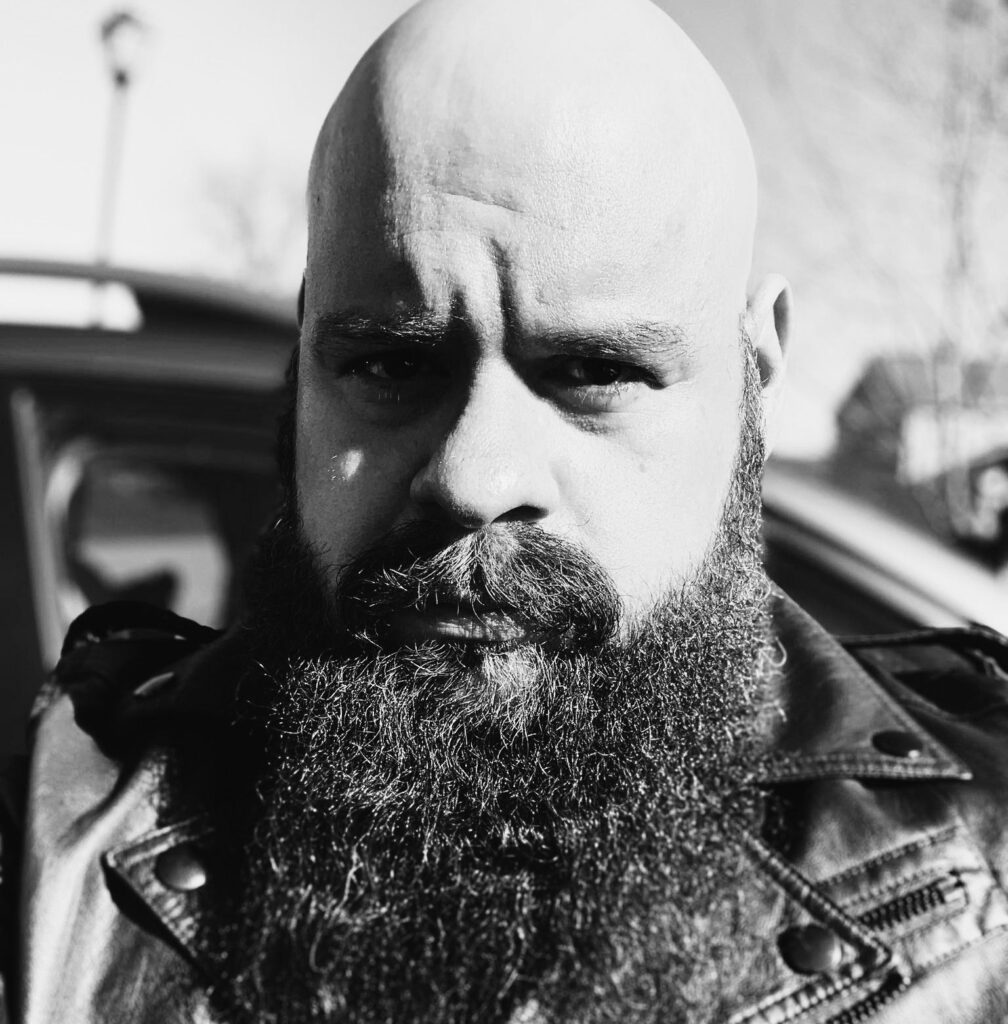
Barlow Adams is a chronically ill writer in the Northern Kentucky area. He has survived kidney failure, lymphoma, and a saccular aneurysm. He occasionally wins writing awards and international competitions. He is overly fond of pie and smush-faced dogs.
One response to “WRITING THROUGH ADVERSITY IN THE POST-TWITTER AGE AND THE HEALING POWER OF LITTLE STORIES | By Barlow Adams”
I was just telling someone else tonight how much I wish I could put things back the way they were in late 2021 Twitter, to bring back all the features and people in one place, except with all my new friendships I’ve made along the way. It’s not the same. I miss what it was. Seeing friends like you along the way used to be commonplace, but now it’s a gemstone in the middle of the beach. I’m just glad when you’re there.