
By Charlotte Hamrick
Today, June 17, is the four-year anniversary of The Nitty Gritty column here at Reckon Review. I want to take this opportunity to thank EiC Meagan Lucas for giving me complete freedom to do my thing with this column. It’s been a pleasure to talk to writers about their books and I’ve learned a lot from each of them. I invite you to peruse the archives – so much goodness in there and you’ll no doubt find several wonderful books to read.
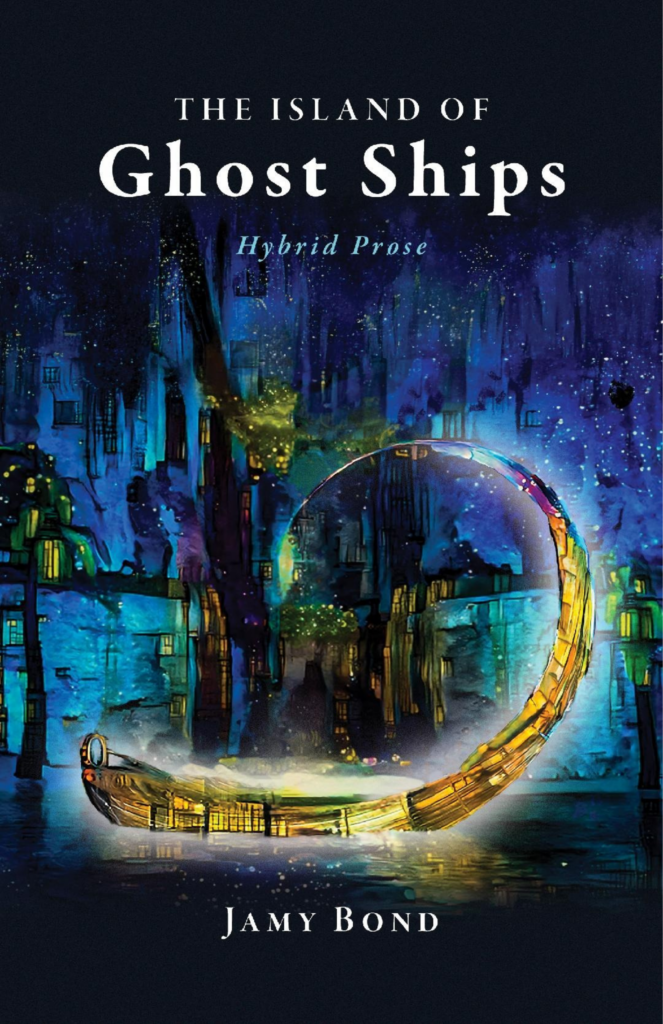
I’m happy that my conversation today is with the author Jamy Bond! Jamy and I go back a long way, from when I discovered her writing in litmags. She soon became a favorite and I was always excited to read her next piece. We became online friends and she has always been a supporter of my own writing. We even started a litmag together! So now I’m very happy to support and promote her upcoming book, The Island of Ghost Ships, a poignant collection of micro memoirs about her sister.
You are an excellent writer of micro memoir. What is it about that genre that draws you to it?
Thank you so much Charlotte. I have always been drawn to memoir, because writing is how I process difficult experiences. When it comes to micro memoir, it works for what I aim to achieve in much of my writing, which is to capture the emotional truth of an experience. Sometimes, a long and involved piece isn’t necessary or can be less effective than a piece that has been stripped of extraneous narrative and chiseled down to one of two essential images that say as much as 20 pages can. I love the challenge of it; I love discovering the power in a micro piece.
What perspectives or beliefs challenged you while creating the pieces and putting together the collection for The Island of Ghost Ships?
I kept thinking that this book had to be longer. It didn’t occur to me that it could be a small, beautiful thing. I’d asked Meg Pokrass to help me expand it, but she said she loved it the way it is and suggested I submit it as a chapbook. This had never occurred to me. Having it published now feels like a true gift. It brings me back full circle to when I started writing about my sister so many years ago. It’s a small book, but between those two covers are 20 years of the experience of losing someone you simply cannot live without.
Did you have difficulty writing your memories of your life with your sister as the women you were all those years ago?
My memory was affected by things that happened to me growing up; some years feel like they were devoured by a black hole. Reading the many letters my sister and I wrote to each other helped in writing this book. Reading her diaries from when she was young and from her time in Africa also helped. This is the place where memory and emotional truth meet the power of micro memoir. For example, I have a memory of holding my sister’s hand in the back of a car, pressing my fingers into her palm in a way that said I love you; it will be okay. I cannot remember who was driving or where we were going or exactly why we were scared. What’s important is the secret language we shared. She knew exactly what I said. And that’s all I need when trying to capture just how close we were.
The first piece in your collection, “Shipwrecked,” touched me in so many ways. It’s exquisite and a perfect opening story. The prose is lyrical and creates a liminal space where the trauma really stands out. It gave me a feeling of a haunting. Can you tell us a bit about its creation?
Thank you, Charlotte. I wept the entire time I was writing that piece and, still, I cannot read it without crying. I was trying to capture the feeling I sometimes have that my sister has come back to me in the form of my daughter. My daughter has a few characteristic gestures that are eerily similar to those of my sister. My daughter will move a certain way and I am immediately transported back in time to a moment with my sister. In writing that piece I thought of memory as a kaleidoscope, always in rotation, a moment that happened many years ago catches the light, then a moment from yesterday, round and round. Time, of course, is a construct, and emotions know nothing about its passing, especially in the case of grief. Still, the details of an experience can blur and change and give way to new definitions: Here I am walking through a game park in South Africa with my sister, and here I am walking through a field of bluebells in Virginia with my daughter. There are 25 years between those two experiences and yet, they are happening simultaneously. In “Shipwrecked” I wanted to capture the deep pain I feel at losing my sister, the deep love I feel for my daughter, and the strange, cyclical way in which these two parts of my heart often merge into one.
Speaking of haunting, how did you decide on the dream-like title? It’s a perfect peek into the collection and titles can be so hard to get right.
The book’s title comes from something my sister said to me when we were visiting Catembe, an island in Maputo Bay off the coast of Mozambique. This was before they had built the suspension bridge that now connects the island to Maputo and we had to take a ferry to get there. As we pulled in to dock, we saw the wreckage of an old ship and a few small boats in the sand. It was strange to see these abandoned pieces of history glistening there in the bright sun. We invented stories about where these boats had started their journey, who they carried, why they were left there to rot, and my sister said, “welcome to the Island of Ghost Ships where even decay can be beautiful.”
“What Feels Like Destiny” is the longest and last piece and is closer to a traditional narrative than the other more lyrical pieces. Was this intentional?
This book came together over many years, and “What Feels Like Destiny” was the very first essay I wrote. It came years before I started working with micro memoir. I’d won a Fulbright scholar grant to go to Mozambique and write about my sister. “What Feels Like Destiny” is what came out of my time there. It’s essentially a very condensed version of a much longer, book-length, manuscript that I abandoned after the soul-crushing process of having an agent submit it to a string of publishers only to have it rejected, repeatedly, because it was too hard to sell. I love that it anchors this small, beautiful chapbook about my lonely journey through trauma, grief, and loss.
Do you have any advice for someone contemplating writing about personal tragedy and trauma such as yours?
I feel that in order to write effectively about trauma you must be willing to fully revisit it. You must dive deep into the darkness of the experience. For me, doing so is very therapeutic. Grief is cruel and overwhelming, and, unfortunately, we live in a society that forces us to experience it mostly in private, because it’s also messy and can push us to do inexplicable things. Writing is my way of surviving it. Writing is a superpower that lets me explore the experience, reshape it, and share it with others.
What is next for you? Can we look forward to another book or publication that you can share?
I’m working on turning a short story of mine into a novel. It’s a slow and tedious process for me, but I’m realizing how spending the last few years solely on writing flash and micros has turned me into a writer after precision, always cutting things down to the word or the space between the words that say the most.
The Island of Ghost Ships can be pre-ordered from Finishing Line Press. Release date is August 28, 2026.
Read more Nitty Gritty!
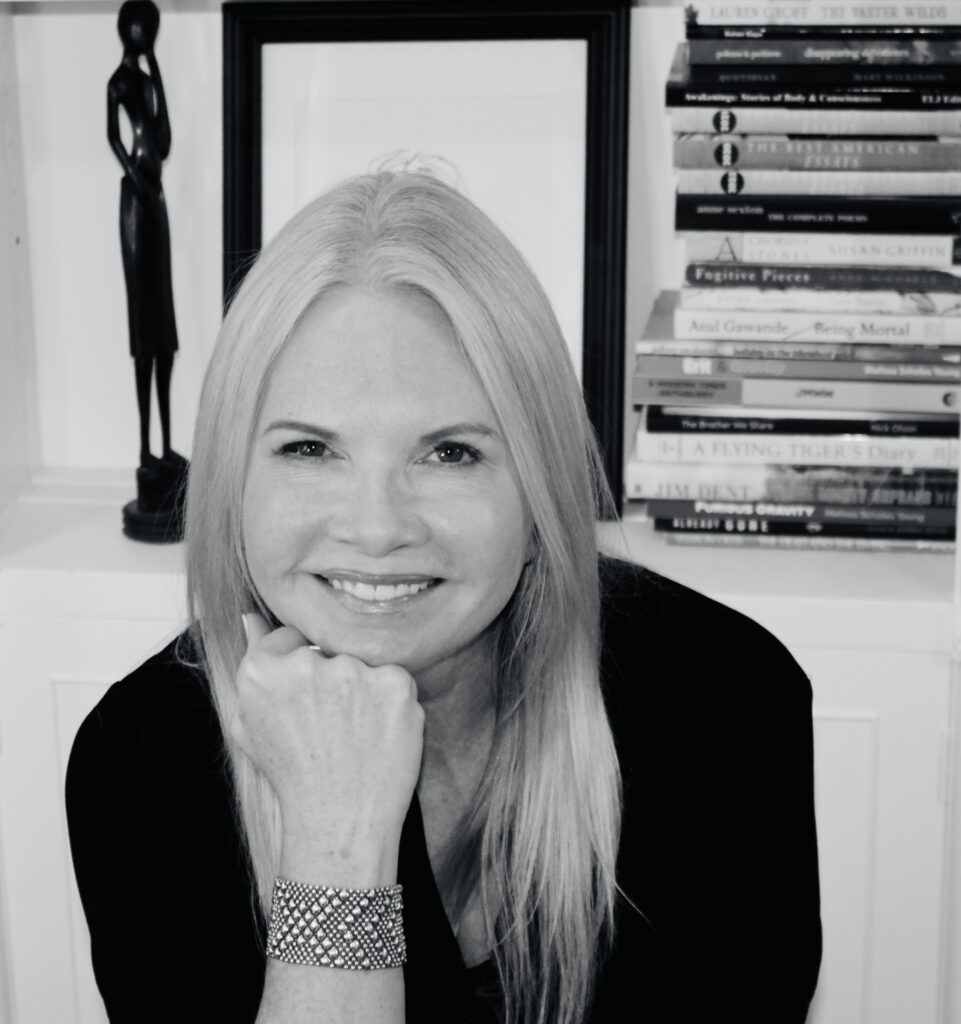
Jamy Bond is an American prose writer. Her debut chapbook Combat Zones won the 2025 Boudin Flash Fiction Chapbook Contest judged by Roxane Gay and was published in March 2026. Her hybrid chapbook, The Island of Ghost Ships, is forthcoming from Finishing Line Press. Her stories and essays have been widely published and anthologized, including in Best Microfiction 2023, The Sun Magazine, The Rumpus, and Wigleaf. She earned a BA in Philosophy and an MFA in Creative Writing, both from George Mason University where she co-founded So To Speak Journal. She lives with her family near Washington, DC. @jamy.bond www.jamybond.com
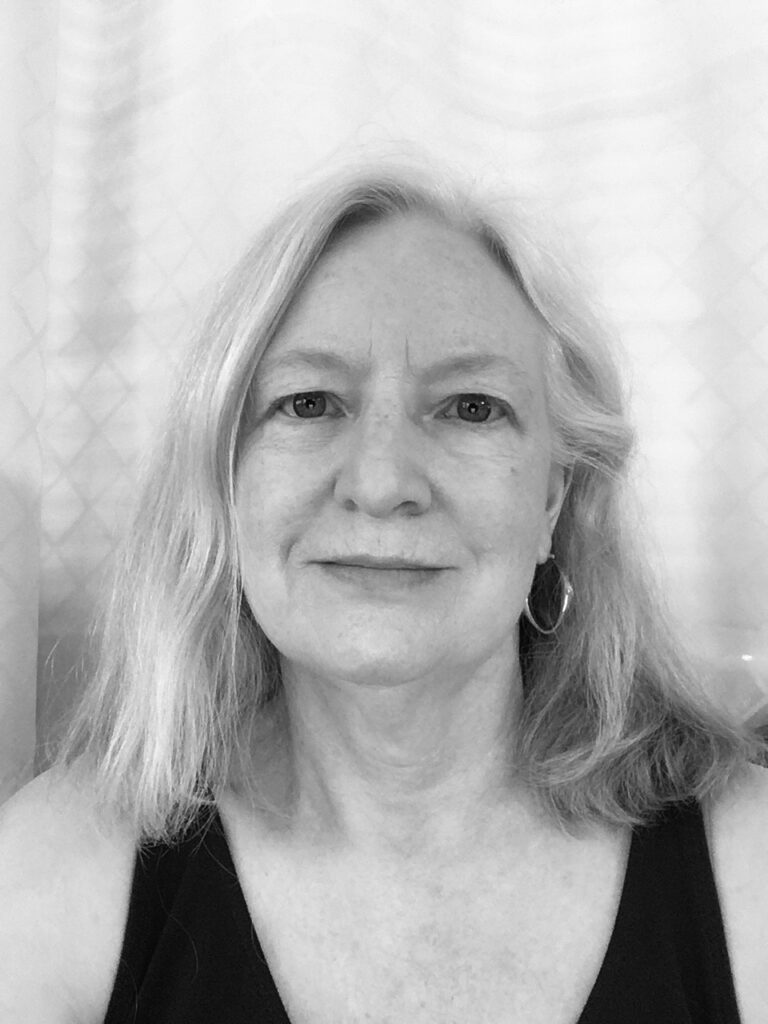
Charlotte Hamrick’s creative writing and photography has been published in a number of literary journals and anthologies including Still: The Journal, The Citron Review, Atticus Review, Reckon Review, Trampset, and New World Writing, among many others. Her fiction was selected for the Best Small Fictions 2022 and 2023 anthologies and she’s had several literary nominations including the Pushcart Prize, Best of the Net, Best Small Fictions, and Best Microfiction. She was formerly Creative Nonfiction Editor for The Citron Review and Barren Magazine. She also writes intermittently on her Substack, The Hidden Hour. She lives in New Orleans with her husband and a menagerie of rescued pets where she sometimes does things other than read and write.