

The smell is what surprised me most about visiting the Ernest Hemingway house in Key West, Florida. Specifically, the dominant smell of the idyllic, subtropical garden surrounding the meticulously preserved Spanish colonial house: cat pee. The undeniable—inescapable—scent of litterboxes and free-range territory marking.
It hit me immediately after handing over my $20 for a ticket and joining the crowd of fellow tourists on the narrow path through the garden of soaring palms, bushy ferns, leggy ginger lilies, and Vanda Lan Mei orchids. I looked for, but could not identify, some of the fruit trees Hemingway personally planted, included fig, avocado, and lime trees. The apocryphal story is that Hemingway told friends he’d fertilize the trees with the “ton of crap” he’d cut from his daily writing. Now, I suppose, that work is done by the sixty-plus cats on the property that are descendants of Hemingway’s white, six-toed cat named Snow White.
I sat down on a bench under the shade of an Old Man palm and watched fellow tourists make their way across the grounds. It was a sunny, blue-skied January afternoon, and most of us had rolled up sleeves and donned sunglasses and hats. I was in town because I’d received a fellowship from the Key West Literary Seminar and had signed up for a nature-writing workshop with poet and essayist Aimee Nezhukumatathil. During a workshop break, I wandered over to the Hemingway house, especially curious about the garden and the environmental feel of the place where the writer spent a decade.
I watched from my bench as tour guides cycled through the grounds, sharing anecdotes about Hemingway’s family and writing life at the house. This was their most-recited story: When Hemingway returned from the Spanish Civil War, he was enraged to discover that his second wife, Pauline, had installed the largest private pool in the Florida Keys. He supposedly took out a penny and threw it at Pauline, shouting some variation of, “You’ve spent all but my last cent, so you might as well have that!” He stormed off to his favorite bar around the corner (though we’ll never know how the penniless man managed to pay for a drink), and Pauline later had the penny permanently affixed to the concrete. Now, the salt-weathered coin is enshrined under glass on the ground, where visitors can dutifully take photos of it.
The “last cent” story marks the end of the house tour, and it’s also a stand-in for the end of Hemingway’s time in Florida. He left Key West—and Pauline and their two children—shortly after the infamous pool fight for Cuba and journalist Martha Gellhorn.
The myth of Hemingway is, of course, that he was an independent adventurer who gave voice to a midcentury spirt of hyper-masculine independence. “A man is a fool to be distracted by family life,” he wrote in letter to a mother-in-law. “Taking refuge in domestic successes is merely a form of quitting.” Yet I couldn’t help but think, as I sat in the cat-pee drenched place where he fully evolved into his power as a novelist, that maybe Hemingway—along with those who later turned him into a legendary caricature of an artistic man—had overlooked a simple, yet fundamental truth about the writing life: that domestic stability is perhaps not a distraction but a necessity for focus. That tending to one’s roots, both in the plant and child form, could help grow the creative voice needed to complete long-form works, too.
Hemingway wrote novels before Key West, and he wrote novels after Key West. But there’s something special the ones he primarily wrote there, which include A Farewell to Arms, To Have and Have Not, and the first drafts of For Whom the Bell Tolls. In Key West, his characters were fishermen and boat captains with homes, harbors, and families. Some scholars have described his work from this time as being “socially embedded,” meaning his characters belonged to communities, which shaped their lives in rich and meaningful ways.
After Key West, Hemingway characters became more solitary; his later stories were populated by men wrestling with inner and environmental “demons” like war or the sea. I’m not saying this is entirely because of his change in residence from Florida to Cuba (and later, Idaho), but I do happen to know how disorienting, jarring, and destabilizing, it can be to undergo a significant personal relocation. It would be impossible for such a shift to not affect the creative psyche.
Last summer, my family moved from Alabama to Florida for my husband’s career. It was a good and necessary move, yet as the rest of my family settled quickly and happily into our new life, I found myself struggling to find my own equilibrium again and to restart my creative practice. For months, I’d been picking at the start of a new novel, but the logistics of the move, the details of my children’s new schools and activities, and the daily grind of what’s for dinner had converged into a fog of distraction for me.
I applied to the literary seminar in Key West on a whim; I was in dire need of some alone time to think and breathe and regroup. Once there, I went to the Hemingway house and garden thinking that I might absorb some kind of energy or vibrational shift that would help me to at least temporarily shake off some of my excess mother-ness. I was hoping to reclaim a little of my own loud, independent, and free-ranging voice.
Instead, I couldn’t get past the smell of cat pee and the hollowness of tourists gaping at a house that is no longer anybody’s home.
Later that evening, as I walked back to my motel, I passed by a church called the Basilica of Saint Mary, Star of the Sea. Inside, the parishioners were singing a service in Creole, and the sound of it spilled out from the open, floor-to-ceiling windows. Their voices were muscular and full, their timbre rich. They sang mostly off key, but occasionally they found it. They wore white shirts and dresses, and their faces and hands were upturned. As I listened with open ears, I tried to close my nose against the bins full of Christmas trash still lining the street, waiting for the next day’s pickup.
I heard rustling in the bushes next to me, and when I glanced down, I saw one of the island’s famous roosters bedded with his hen and chicks.
I felt it then, in my bones, that eventually I would come back to long-form writing, that maybe my mind is actually in the middle of working something out before it decides one day to rocket itself onto the page. For now, perhaps I simply need to accept that my own little chicks are not a distraction from my creative life but rather the emotional root from which it is still emerging. Though this kind of insight is unlikely to sell thousands of $20 tickets, I believe it is true that there is no more creative freedom in roving the world, essentially alone, than there is in embedding ourselves in the lives of those who depend on us.
There is creative productivity in making lunches and tying shoes and pushing swings. Ensuring my family is well tended is not “quitting.”
Hemingway’s legacy garden in Key West is beautiful on postcards, but what I will remember most about the actual experience of being there is the smell: the sharp ammonia of waste. His Key West homestead is where his most long-lasting family bloomed and faded, and for me, his professional success cannot be decoupled from the other side of that hostile penny of truth.
We can admire our legends and, at the same time, aspire to be very different from them.
Read more of Sandy’s work here at Reckon.
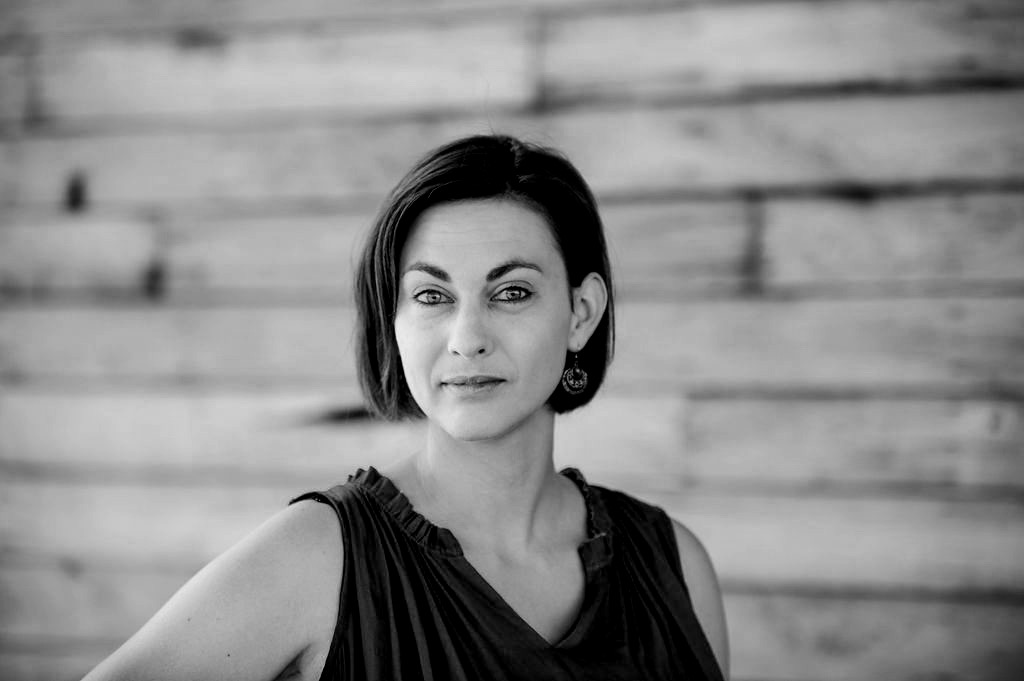
Sandra K. Barnidge is an Alabama-based writer with a passion for small towns and overlooked places. Her fiction leans speculative and has appeared in Barren, Nimrod, The Fiddlehead, Reckon Review, Reservoir Ridge, and elsewhere.