
He pauses mid-sentence now, the way a man might stop at a door he meant to walk through and forget what waits on the other side. A small stilling of the hand. The fingers lift, hover, as if the word might be caught in the air if he gives it a second longer.
Sorry, he says.
It was right there.
On the tip of my –
At first it is easy to miss. The rhythm closes around the gap. The sentence resumes, slightly altered, the meaning carried by something adjacent. You hear it, if you are listening for it, as a softness where there used to be a clean edge.
Then it begins to happen more often.
The things he has begun to lose are small at first and then not. Keys, set down and found again in a place that makes no sense. A name, held just beyond reach, replaced with that man, you know the one. The route to the hardware store he drove for forty years, now taken slower, with a pause at the light where he used to turn without thinking.
Most of these I cannot help him with.
The keys return on their own time.
The names sometimes do not.
The route—I drive.
But the words.
The words I can say.
It happens one afternoon at the sink. He is rinsing a glass, turning it in his hands as if the motion itself might bring the sentence back. He is telling me about the neighbor who moved away, a good man, always there when something needed doing.
He helped me with the—
The glass turns once more. His hand lifts, circles, as if indicating the shape of it might call the word forward.
Fence, I say.
Yes. The fence.
And the sentence closes. Not neatly, but sufficiently. The story continues. The glass is set down. The moment passes as if nothing has happened, except that something has, and I have seen it.
The way a parent hands a word back to a child.
The way he once did for me.
After that, I begin to notice them. Not the missing—those disappear too quickly—but the space they leave. A particular kind of pause. A silence that is not hesitation, not searching exactly, but the absence of a thing that had always been there.
I start writing them down. Not all of them. Only the ones that keep leaving. The ones I find myself saying again and again, slipping them back into his sentences so he can continue. The ones that seem to belong to him in a way that makes their absence feel like a small, daily theft.
I keep the list on an old receipt at first. Then on the back of an envelope. Then properly, in a notebook, on a page meant for it.
These are the ten he loses most often.
Plumb /plʌm/ adjective, adverb, verb. Exactly straight; true to the vertical; to test whether a thing hangs as it should. From Old French plombe, from Latin plumbum — lead, the weight that tells a man what gravity thinks.
You used this word when something mattered enough not to be almost right. The cabinet in the kitchen on Fremont Street, which you would not let us load with plates until you had stepped back from it three separate times, then set the level on top again as if the bubble might change its mind. The whole room waited. Breakfast waited. You said plumb the way other men said good enough, except you never meant good enough. You meant true. I can still see your hand flattening the wall beside it, not touching the cabinet itself, as though steadiness could travel through plaster.
Plumb and true, you would say. And set the level down.
Shim /ʃɪm/ noun, verb. A thin piece inserted to make something level or fit. From an old carpenter’s term, in use since the late eighteenth century — its own provenance lost.
The washer would not stop walking across the floor. Each cycle it moved a little farther from the wall, a slow migration you refused to accept as inevitable. You knelt beside it with a handful of small, cut pieces of wood—nothing finished, nothing meant for this exact purpose—and slid them under one foot, then another, testing with your palm, rocking the machine gently until it settled. It was quiet work. No one would ever see what you had done. The correction disappeared as soon as it was made. Later, when it ran, it stayed.
I do this now too. I did not know I had learned it.
Whet /wɛt/ verb. To sharpen a blade; to bring an edge back to usefulness. From Old English hwettan — to make keen, to animate, to urge.
Saturday mornings, before anything else, you stood at the counter with the stone laid flat and the knife held at an angle you never explained. Water darkened the surface. The sound was steady, low, almost private—the blade moving away from you, then back, the rhythm exact without being counted. We were not to interrupt. This was not ceremony. It was maintenance. You did not test the edge with your thumb. You sliced a tomato, cleanly, without pressure, and nodded once as if the result had been expected all along.
You never told me the angle. I still do not know it.
Mend /mɛnd/ verb. To repair what is worn or broken; to restore to working order. From Middle English menden, shortened from amenden, from Latin emendare — to take the fault from a thing.
You did not throw things away if they could be mended. A chair with a loose rung, turned over and held between your knees while you worked glue into the joint with your finger. A shirt sleeve, the fabric thinned to almost nothing at the elbow, stitched back together with thread that did not quite match but held. You never spoke about it as thrift. It was simply the way things were handled: if it could be made right again, you made it right. The work was patient, sometimes invisible, and when it was done, the object returned to its place without announcement.
The chair is still in the kitchen. The rung has not moved.
Lee /liː/ noun. The side sheltered from the wind. From Old English hlēo — protection, cover, refuge.
At the lake you always chose the side that was quiet. Not the open water where the wind ran unchecked, but the place where the land broke it, where the surface lay flatter, more readable. You did not name what you were doing. You simply stood there a moment, feeling it, then moved us without explanation. Later, when I learned the word, it felt like something you had known all along—that there is always a side of things where the force is less, if you know how to find it.
You looked for where the weather gave way.
Abide /əˈbaɪd/ verb. To remain; to endure; to stay present without leaving. From Old English ābīdan — to wait, to remain, to continue.
After her surgery, you sat on the porch in the evenings without speaking much. Not withdrawn, not absent—simply there, in the same chair, at the same hour, watching the light move off the trees. People came and went. They spoke to you. You answered. But mostly you remained. The word was never said aloud. It did not need to be. It was in the way you did not leave the moment simply because it offered nothing to solve.
Some things are met by staying.
Square /skwɛər/ adjective, noun, verb. True at right angles; honest; in proper relation. From Old French esquarre, from Latin quadrare — to make four-sided, to bring to true angle.
You used this word for more than wood. A frame could be square, yes, but so could a man. That’s not square, you would say, when something was off—not crooked in a visible way, but wrong in its measure. I remember you standing in the doorway after a conversation that had not gone well, one hand on the trim, looking at nothing in particular. You did not explain what you meant. The word held it. A thing either sat right in the world, or it didn’t.
You trusted the angle more than the argument.
Sound /saʊnd/ adjective. Solid; reliable; free from defect; worthy of trust. From Old English gesund — whole, uninjured, in good condition.
You used this when something could be depended on. Not perfect, not new, but solid all the way through. A beam that would hold. A plan that would work. A man whose word did not shift under pressure. It was a judgment you did not revise once given. When you said something was sound, the matter was settled. I heard you say it once about a decision you had made years earlier, as if time itself had tested it and found no fault.
It meant it would hold.
Folks /foʊks/ noun. One’s people; those to whom you belong. From Old English folc — people, a body gathered together.
This was the word that gathered everyone. Not family in the formal sense, not relatives, but something looser and more complete. Your folks. Our folks. It included people who had no clear place on a chart but had stood in the kitchen long enough to count. When you said it, the room widened slightly, as if more chairs had been added without anyone noticing.
The welcome was in the particular quiet of your voice.
Provenance /ˈprɑːvənəns/ noun. The origin of a thing; where it comes from and how it arrived. From French provenance — origin, source.
You used this when you picked something up that did not belong to you yet. A tool at a sale. A chair left out at the curb. You wanted to know where it had been before it reached your hands. Not out of suspicion, but out of respect. Things did not appear without a past. They carried the use of others in them. You would turn the object once or twice, as if its history might show itself if given the chance.
Nothing, to you, came from nowhere.
Nor do these.
I am writing them down to give them back to you.
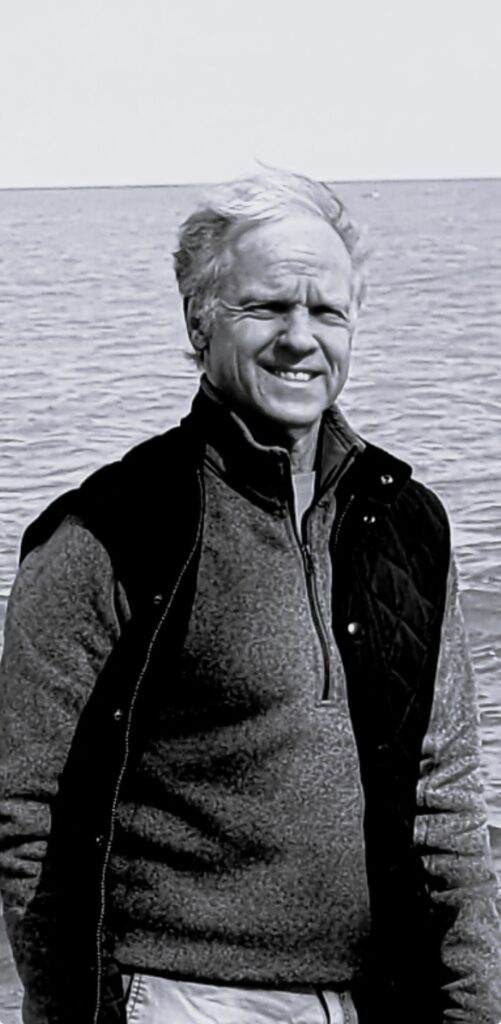
J.M.C. Kane is the author of the non-fiction book Quiet Brilliance: What Employers Miss About Neurodivergent Talent and How to See It (CollectiveInk UK). He is an ASD-1 and writes from this learned experience. His prose work has been published in more than three dozen literary journals & magazines, including Plough, Camas, HeartWood, The New Ohio Review, Blue Mesa, Smokelong Quarterly, and Redivider (Emerson). He lives in New Orleans with his family where he works as an environmental attorney.