

Lately I have been a serious student of herbalism—the art and craft of healing through plant medicine. Part of the attraction is my fascination with the ancient science of alchemy. One way to make plant medicine is through distillation and I dream of distilling plant-based medicines in a copper still in my back garden. In one method, distillation separates the alcohol, or “spirit,” of the plant from the other constituents; then once the plant has been distilled and the matter has been cooked and turned to ash, all the processed parts are recombined to make the herbal remedy.
Perhaps this interest in alchemy is a reaction to the planet’s billions of people and the proliferation of text and art and information. Perhaps I am a luddite.
Although many people may associate alchemy with a medieval search for immortality, or as the precursor for chemistry, alchemy is much older and has always had a psycho-spiritual aspect—inner transformation. In my studies, it seemed to me that all art, including writing, must be essentially (no pun intended) an alchemical process. We take the raw material of our daily experience, cook it down into its various constituents, and if all goes well, we then recombine it in such a way that it becomes art.
I journaled about this idea one night before falling asleep, curious about how far I could stretch the metaphor.
When the alarm went off at 6:30 am, I hopped out of bed to help my kids get ready to catch the 7:05 school bus when I noticed that my body was stiff and my neck so tight I could not easily turn my head. The last two weeks had been busy and stressful and I hit a wall. Like Mrs. Bennett in Jane Austen’s Pride and Prejudice, I was ready to take to my bed with a side of smelling salts just in case I have a fit of the vapors. My nerves, my nerves! Won’t someone please take pity on my nerves!
I got the kids out the door and planned for a long morning in bed, grateful for a life where I could take time for some self care. Grateful that I didn’t have to push through the pain and exhaustion like I did during my 20s and 30s when missed work meant unpaid bills.
Before returning to bed, I visited my apothecary closet, where the fragrance of dried herbs always lifts my spirits. I searched a bit of “self-care” first aid. I noticed a wild yam tincture, a smooth muscle relaxant, and took a few drops. Then I chose an aromatic tea blend with holy basil, orange peel, calendula, oat straw, and nettles—nourishing and soothing to the nervous system. While I waited for the water to boil, I grabbed a stack of herbals (books about herbal medicine) from a nearby bookshelf before tottering to bed with my big mug of tea. I wanted to use this opportunity to study how more experienced herbalists deal with systemic inflammation and pain.
One book I grabbed was unlikely to help this very physical problem—Matthew Wood’s A Shamanic Herbal. Wood is a prolific herbal writer and many of his books are considered modern classics in the field, but this latest book felt dense to me. It was heavy on the shamanism side. Reading it a couple of years ago, I remember thinking that I was not the intended audience for the book. I chided myself for pulling it from the bookshelf, surely there would be nothing in there to help a creaky middle-aged mom, one of his other books would be a better choice; but I felt a strong urge to include it in my morning studies.
Once snuggled in bed, with my doggie curled up at the foot on that dark and rainy morning, I picked up the Shamanic Herbal and opened, by chance, to a page where I had actually underlined a sentence: “If we follow a fantasy and try to actualize it, it will lead us nowhere.” By contrast, he writes, “imagination rises up from what is true” (p. 136). I read the whole section again; intrigued by the possibility that imagination rises similarly to the “spirits” during distillation.
For Wood, what he calls “fantasy” points to unexpressed needs of the body. These are our ideas and motives based on our experience. This is when we are writing to work through something, consciously or unconsciously. Whereas “imagination” comes through the body, channeled from something greater than the individual doing the writing. I think of this as the difference between Experience and Inspiration.
Elizabeth Gilbert’s book Big Magic imagines Inspiration as having a life of its own, and visiting different artists in the same timeline. This explains the frequent appearance of two or more books with similar premises published within months of each other. Gilbert herself described a book she did not end up writing, only to see the premise of her idea manifested in Anne Pachett’s State of Wonder.
Stories “write themselves,” as Louise Erdrich recently noted: “The novels, they — and I must have something to do with it because I do have an immense amount of research that goes into everything and thought and emotion. But there’s some piece of it that belongs to some other world, some other entity, not an entity, but that place where art happens, whatever it is.” Janisse Ray refers to this Other World as the “mysterium” and writes about ways to access it in her book, The Magical Craft of Creative Non-Fiction. Ray is a nature writer, and the time she spends communing with the natural world figures largely in how to access the mysterium.
I don’t say that to be glib. I truly believe that the natural world is a portal to the Other World, the place of Inspiration, a recurring theme in wisdom traditions the world over (which is how Wood also arrived at the idea). But I bring up a writer’s own Experience to call attention to the other side—the body, that which arises from artists themselves. Every writer composes from their own embodied experience. It is the filter through which Inspiration takes shape. Ta-Nehisi Coates discusses the writer’s role at length in his book The Message, a reflection on colonialism and racism. Here, Inspiration and Experience converge through the body of a Black writer traveling through an unjust world. Likewise, with all the writers I mentioned above: their passions and subject matter arise from their own embodied experience in the world.
It is through the artist’s distillation process—self-knowledge and rumination through the physical act of writing—that Inspiration rises and separates from Experience. And it is on the page through revision, as we move back and forth between narrative and exposition, that we cook down and recombine these elements. We recognize patterns and themes unique to the person or story, just as botanical medicine has specific properties unique to the plant. In this way our stories can be medicine—not a cure-all, but perhaps, an ephemeral balm that feels inspired.
Read more of Brandy’s work here at Reckon.
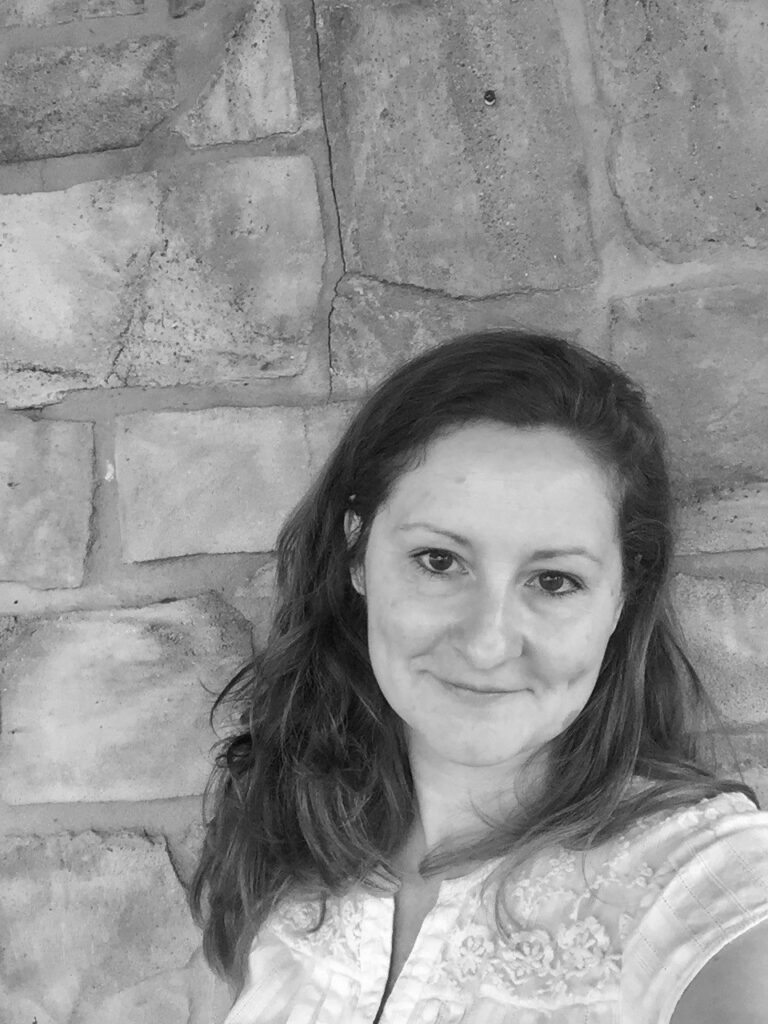
Brandy Renee McCann, PhD is a writer and social scientist whose work is focused on life in Appalachia. Her creative work has been published in Reckon Review, Still: The Journal, Change Seven, Pine Mountain Sand & Gravel, The Dead Mule, and other literary venues. Brandy’s scholarly, collaborative work on aging in Appalachia can be found in a variety of peer-reviewed journals including the Journals for Gerontology: Social Sciences, Journal of Rural Mental Health, and Journal of Family Issues among others. Brandy is a research associate and project coordinator at the Center for Gerontology at Virginia Tech. To learn more about the family caregiving research in which she’s currently involved, visit here: https://careex.isce.vt.edu. Her social media handle is appalbrandy.